Rediscovering Type: Why Fontbase Feels Different
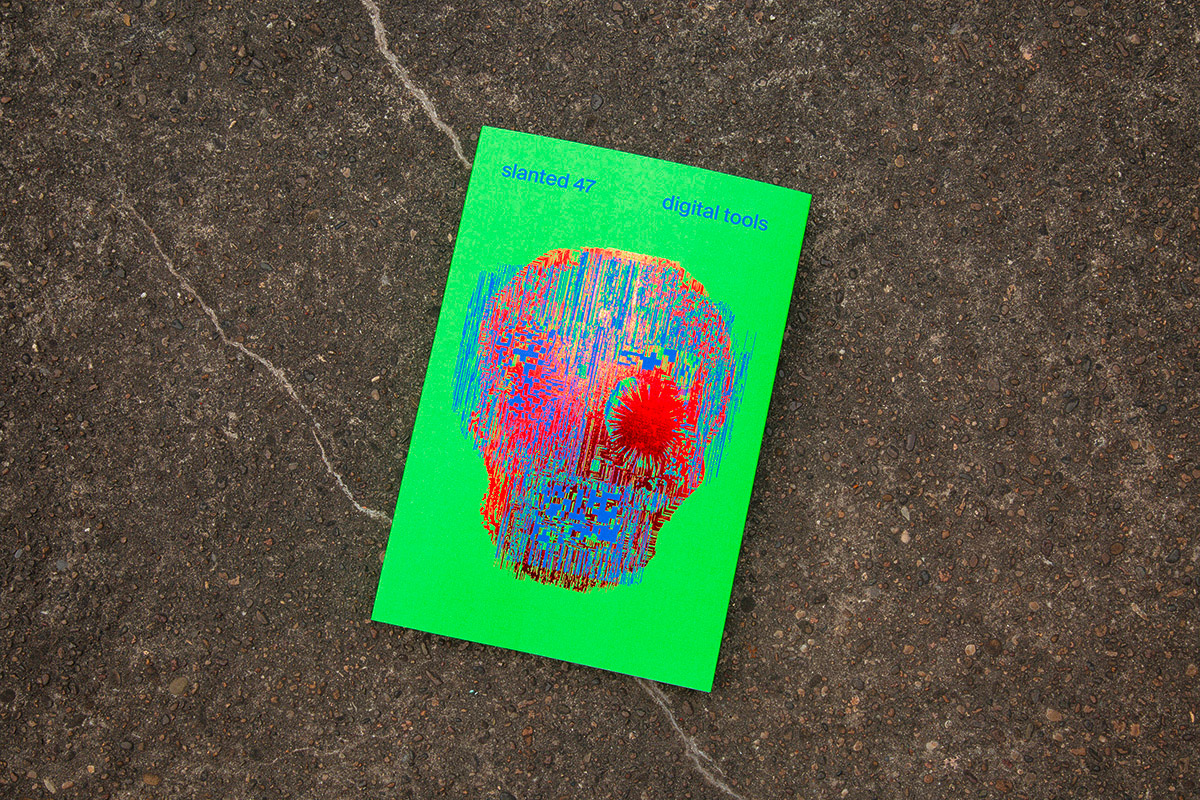
Slanted Magazine #47—Digital Tools
Slanted Magazine #47—Digital Tools explores the instruments shaping contemporary creative practice. Through interviews, articles, and numerous examples from graphic and type design, illustration, 3D, web, generative design, and creative coding, the issue looks at how digital tools are used to create, question, and rethink design itself.
In February 2026, Antonin Waterkeyn, recommended by Dominik Levitski, founder of FontBase, shared his perspective with us. The resulting text was written by Lars Harmsen and featured in Slanted Magazine #47—Digital Tools. The magazine is being reprinted and new copies are expected to ship in October. In the meantime, enjoy reading the full text online—and look forward to holding the printed issue in your hands again soon.
Font management has rarely been a love story. For most designers, it has long been a necessary utility—something to keep chaos at bay, not something that actively fuels creativity. Over the years, different generations of software promised structure and control. What they rarely delivered was pleasure, intuition, or genuine discovery.
Antonin, the video artist, motion designer and art director behind antonin.work, knows this evolution firsthand. With more than twenty years of experience working across museums, cinema, humanitarian organizations and fashion, and a practice deeply rooted in typography and typographic animation, his relationship to type is both professional and personal. His current research into animated letterforms—particularly using Cavalry—demands precision, flexibility and speed.
Asked about earlier font managers, he is direct: “I’ve always found that font managers lacked ergonomics and consistency, particularly when one isn’t perfectly organized.” The problem, in other words, was never access. It was friction. Like many seasoned designers, Antonin has accumulated a vast personal library—tens of thousands of fonts gathered over decades. “Like everyone else, I imagine, I own 40,000 fonts but invariably use only the same 10,” he says with a certain irony. The abundance of choice often results in creative repetition. Not because alternatives do not exist, but because they are too deeply buried.
What changed with FontBase was not simply the interface, though he notes that “the software is aesthetically refined, which significantly enhances the user experience.” It was the way the tool reframed search and experimentation. “FontBase offers two decisive advantages for me,” Antonin explains. “The ability to preview variable fonts directly within the software, and its ‘Super Search’ tool, which I’ve become completely dependent on.” Variable fonts, with their adjustable axes and fluid weights, are central to contemporary typographic practice—particularly in motion design. Being able to test these variations instantly, without leaving the manager, removes an entire layer of interruption.
But it is SuperSearch that truly alters behavior. Instead of relying on naming conventions or carefully curated collections, Antonin can search visually—by weight, width, proportion or contrast. “It allows me to instantly search for all condensed variants, for example, without having to create a dedicated collection,” he says. More importantly, “it enables me to preview typographic pairings without opening third-party software.” The effect is subtle yet profound. “Since I’ve been using this search function, I’ve been rediscovering typefaces I hadn’t revisited in years, even decades.” The manager becomes less of an archive and more of a living studio table—a place where forgotten tools resurface and new combinations emerge organically.
This shift from administration to exploration continues in FontBase’s Playground feature. While the software can simulate webpage typography and export CSS, Antonin’s interest lies elsewhere. “I mainly use it to see how two typefaces can work together, without having to switch to another software. The code part interests me very little.” What matters is the immediacy of visual testing—the ability to evaluate relationships between letterforms in real time.
Even the Discover section, which highlights releases from smaller independent foundries, resonates with him—albeit unexpectedly. “To be honest, I’m discovering this feature thanks to this interview! I find the idea truly brilliant.” In an industry where visibility can determine survival, integrating discovery directly into a daily workflow subtly supports the broader typographic ecosystem.
Interestingly, Antonin’s loyalty did not begin with a subscription. “It was the free version that won me over for more than a year,” he recalls. Only later did he move to the Pro version. “If you’re only looking for a good font manager and don’t need the other options, it’s an excellent software in its free version.” That accessibility reflects the software’s larger philosophy. FontBase does not attempt to overwhelm with complexity. Instead, it reduces resistance— between idea and execution, between archive and experiment, between possession and rediscovery. For a designer whose practice revolves around the movement and transformation of letterforms, that reduction of friction is not a minor detail. It is what allows typography to remain alive.
Font management may never become romantic. But in the hands of the right tool, it can become something close to inspiring.