Read more
Lars Harmsen successfully combines theory and practice in the world of design. As the co-founder and publisher of Slanted Publishers, as well as partner and Creative Director at Melville Brand Design, he brings extensive experience, which he passes on to his students as professor of Typography and Editorial Design at Fachhochschule Dortmund–University of Applied Sciences and Arts.
What motivated you to become a professor?
I became a professor to pass on my experience and out of gratitude for the guidance I was given. During my training at an agency, I benefited from great support. While I studied in Basel and Pforzheim, I met inspiring professors who introduced me to the world of American design and the digital future. These experiences motivated me to share my knowledge with the next generation. I particularly appreciate the interdisciplinary teaching and creative freedom at Fachhochschule Dortmund. My practical experience from working in both an agency and a publishing house feeds directly into my teaching, helping me conduct a kind of reality check.
What is it like working in the Faculty of Design?
As a professor, I work with young people as equals. This collaborative relationship is the main reason why I find teaching at the university so exciting and enriching. These interactions not only keep me on my toes, but also reflect different perspectives back to me. I find it fascinating to observe how students think, what they learn here and how they apply it.
Why did you apply to Fachhochschule Dortmund?
I deliberately applied to universities that offer more than just a single design degree program. I am interested in interdisciplinary exchange, and as a graphic designer I want insights into fields such as film or scenography. At Fachhochschule Dortmund, I found the rich mix I was looking for. I also wanted to apply to a university in a city that is not constantly in the spotlight like Berlin or Munich but instead offers growth potential. Dortmund has established itself as an outstanding location for exhibitions and events.
You founded an agency and are the publisher of a magazine. Can you pass this entrepreneurial spirit on to your students?
Yes, with mixed feelings. After I completed my studies, I made the mistake of not working at a large agency first to build a network. However, going independent early on taught me to work autonomously and gave me a sense of freedom and pride. Many students prefer to start their own business straight after graduation, often out of fear of being stuck in a rat race and in search of a better work-life balance. I think it depends on the individual: some benefit from gaining experience and building a network before becoming self-employed. I recommend thinking carefully about this step.
How do you manage to balance your professional and personal life while also being involved in other projects?
I’m able to do this by working with partners across all my projects instead of doing everything on my own.
How do you approach your teaching?
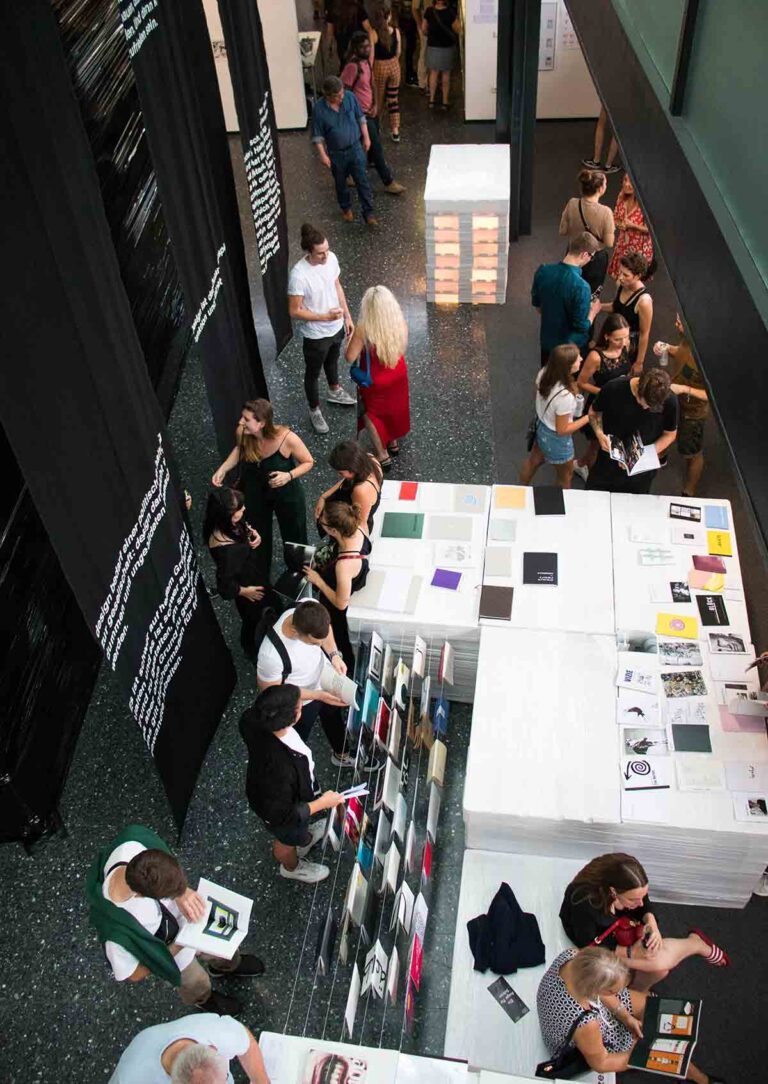
I design every day because I love it and because it helps me expand and pass on my knowledge. I also enjoy traveling and organizing excursions with my students. These intensive experiences in different cultural contexts are extremely enriching. I believe it is important to take students out of Dortmund and offer them new perspectives.
What makes your teaching special?
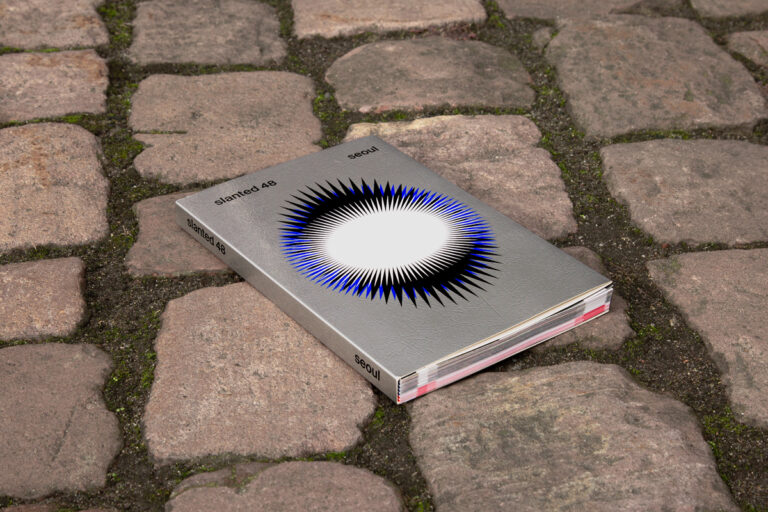
The publishing house I have built over the past 20 years enjoys international recognition and offers numerous collaborations with students. These connections between teaching and publishing are very valuable.
How important is research to you?
Research holds great importance for me. Each issue of Slanted explores aspects of research. I also believe it is esssential to take a historical perspective in order to better understand future developments. A central aspect of my research is the creative use of tools. By questioning their original function and using them in new ways, new possibilities emerge. For example, it is possible to design a poster using Excel. This kind of experimentation is fun and fosters innovative approaches in design.
What do you think the future of your field looks like?
I believe we need to approach curricula more flexibly, as cycles continue to accelerate. Internationalization is crucial, and there is still room for growth in this area at our university, for example through English-taught degree programs. We should also move away from traditional tools and adapt our teaching methods to the pace of the digital age. It is important that students develop critical thinking skills and learn to question content. They also need inner strength to cope with the challenges of rapid change.
Additional information on professorships at Fachhochschule Dortmund – University of Applied Sciences and Arts can be found here.
Image Credits:
FH Dortmund, Campus Max-Ophüls-Platz, Fachbereich Design
Portrait Lars Harmsen
Workshop Prag
Workshop Prag, Saeeda Shabbir
ARTHELPS
Laura Lipinski
Im flüstern der wellen
Konterfrei Reinhard
Wundertüte, Hannah Baumann, Lars Allenberg
Siebdruck Workshop Graz